NEW & BLOG
Build a highly cohesive team of thermal management, special welding and
precision manufacturing
From AI Data Centers to 800V EVs: What It Really Takes to Manufacture Liquid Cold Plates
Sep. 28, 2026
Liquid cooling used to be the exception — confined to supercomputers and exotic hardware. Not anymore. AI servers packed with high-power GPUs, 800V fast-charging EV architectures, high-density IGBT modules in rail traction, and ever-hotter semiconductor equipment have pushed air cooling past its limits. Direct liquid cooling is now the mainstream, and that means the liquid cold plate has become one of the most safety-critical components in modern electronics.
A cold plate looks simple: a machined aluminum plate with internal channels and two ports. Manufacturing one that survives a decade of thermal cycling, pressure pulses, and coolant chemistry — in volumes of hundreds of thousands per year — is anything but.
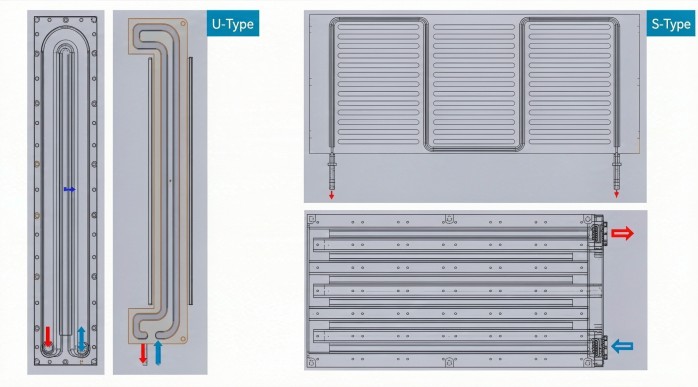
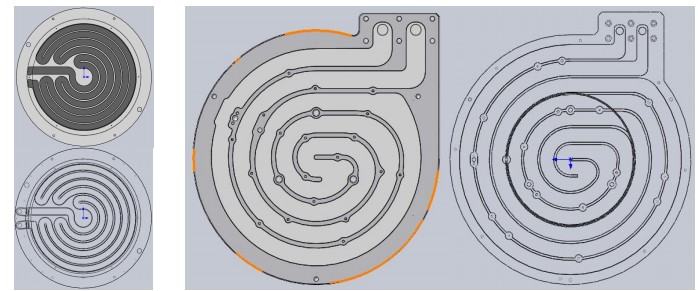
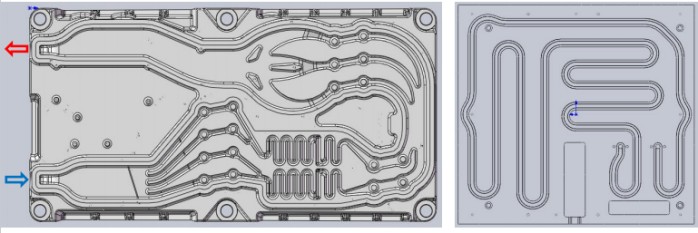
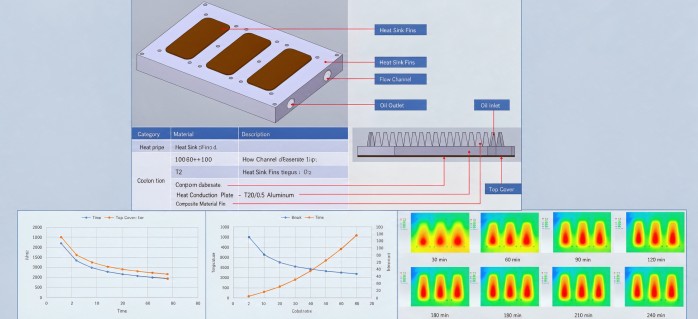
It starts with design, not machining. Channel topology determines thermal performance: U-type serial channels, S-type channels, swirl-type channels, or cast complex 3D channels each suit different heat-flux profiles. Design is iterated through coupled thermal and flow simulation — matching liquid flow rate, flow resistance, and temperature distribution before a single chip is cut. High-efficiency heat-transfer fins in aluminum, copper, or Al-Cu composites are selected to match the application's thermal budget.
Then comes the joining decision. The cover plate must be sealed to the channel plate, and the joint must be simultaneously:
● strong enough to survive burst pressure and pressure impulse cycling,
● leak-tight over the product's lifetime,
● thermally conductive (it sits directly in the heat path),
● and free of internal debris that could clog fine channels or pump seals.
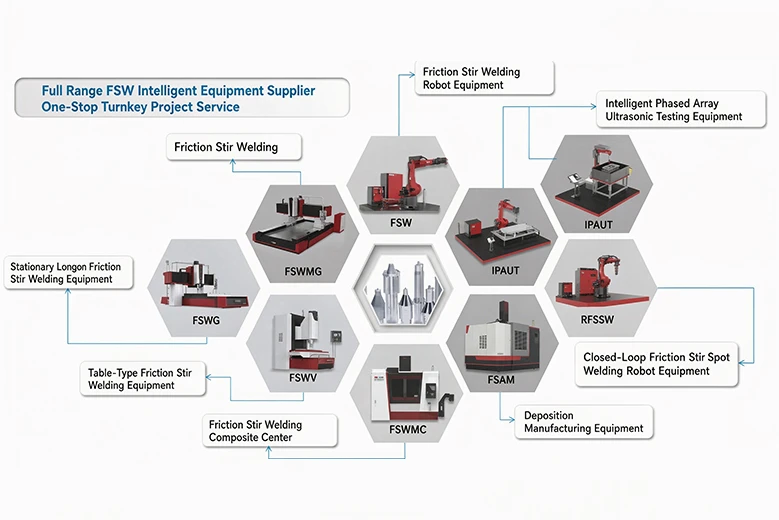
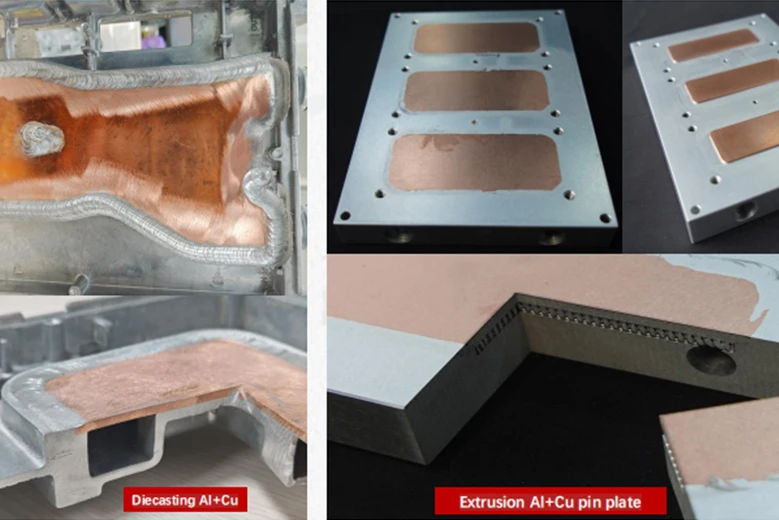
This is why friction stir welding — solid-state, low distortion, porosity-free — has become the preferred sealing route for high-reliability cold plates in Al/Al, Al/Cu, and Cu/Cu combinations. Machining and assembly before welding, FSW to seal, precision machining after welding to restore interface flatness: that is the production loop.
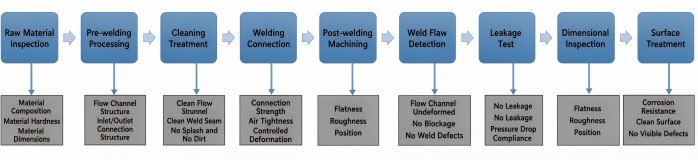
The part is only as good as the test regime. A serious cold plate manufacturer validates a checklist most buyers never see: cleanliness of internal channels; burst pressure at room temperature; pressure drop across flow rates; pressure impulse cycling with leak checks; hydrostatic strength; internal corrosion resistance; low-temperature, high-temperature, and thermal-shock cycling with coolant inside; and flatness and roughness of the heat-absorbing zone. Every production part then goes through weld-seam non-destructive testing, dimensional measurement, helium leak detection, and surface treatment inspection — with full traceability from raw material certificate to shipped part.
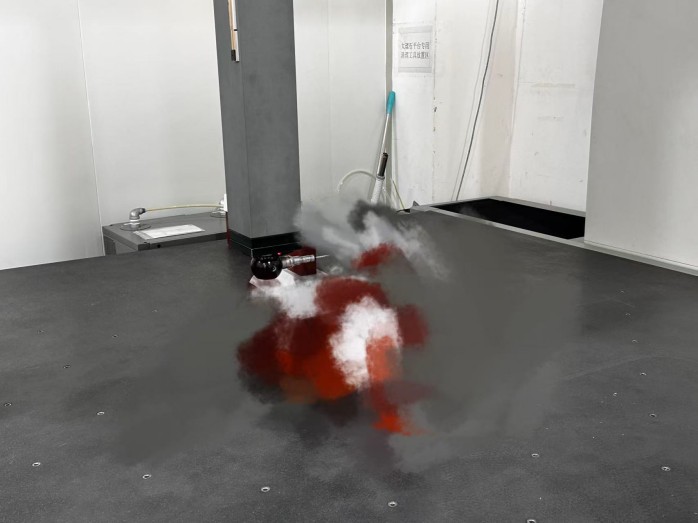
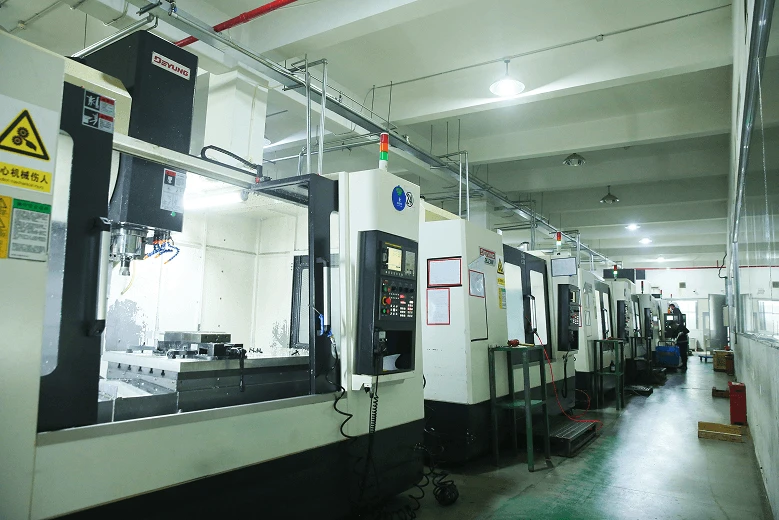
Scale changes everything. Prototypes can be babysat; mass production cannot. Consistency at volume requires in-house control of the full chain: raw material composition and hardness verification, pre-weld cleaning, welding parameter control, post-weld machining on machining centers, and automated inspection. Deyanfu Machinery completes more than 93% of manufacturing processes in-house, with Hexagon coordinate measuring machines (up to 2,200 × 3,300 × 1,500 mm), automated ultrasonic NDT with detection accuracy up to 99%, and helium mass spectrometer leak testing on the line.
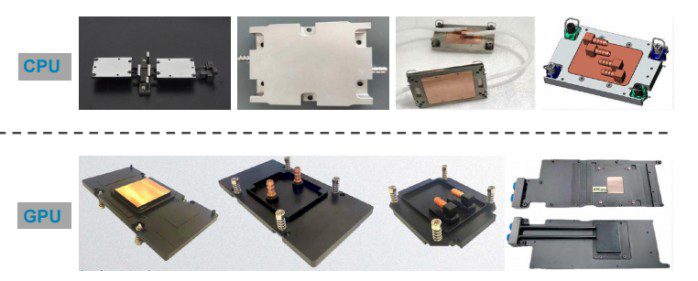
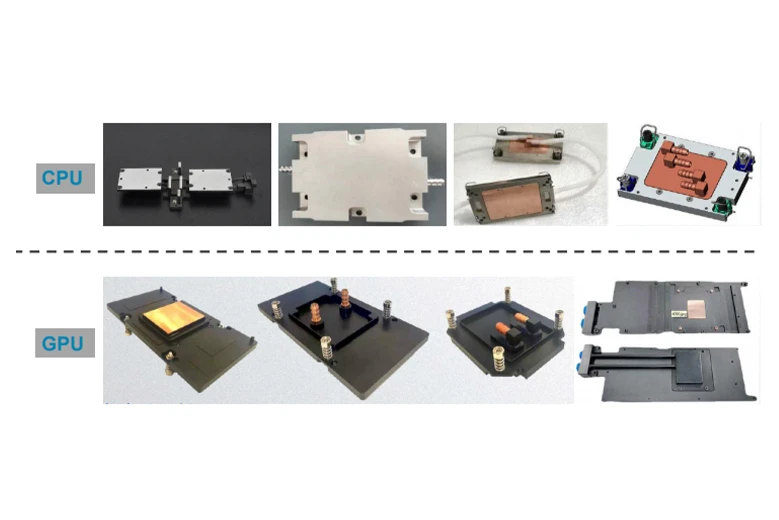
Where these plates end up. Deyanfu's liquid cooling plates serve data center CPUs and AI-compute GPUs, telecom ASIC cooling, wind/solar and grid IGBT modules, rail traction drives, laser systems, semiconductor temperature-equalization systems, EV power batteries, motor and controller housings, ultra-fast charging modules, and ADAS computing units. The same platform produces vacuum chambers and hydrogen fuel-cell stack enclosures. Water-cooled plate shipments passed 200,000 pieces as early as 2020, and the current lineup covers annual mass production across six product families.
The takeaway for sourcing teams: when comparing cold plate suppliers, don't compare unit prices. Compare test coverage, leak-rate specifications, NDT capability, and process ownership. A supplier who machines, welds, tests, and finishes under one roof can be held accountable for a leak; one who coordinates four subcontractors cannot.
LATEST NEWS
What is friction stir welding (FSW)? How does this solid-state process deliver low-distortion, leak-free aluminum welds for EV battery trays and liquid cold plates? A manufacturer's guide.
Sep.28,2026
From AI Data Centers to 800V EVs: What It Really Takes to Manufacture Liquid Cold Plates
Liquid cooling is going mainstream in AI servers and EVs. A look inside liquid cold plate manufacturing: flow channel design, FSW sealing, burst and leak testing, and mass production.
Sep.28,2026
Every hardware generation asks the same question: can we combine two metals in one part — copper for conductivity, aluminum for weight, titanium for strength — without the joint becoming the weakest link?
Sep.28,2026
Refill Friction Stir Spot Welding: A Cleaner Alternative to Resistance Spot Welding and Riveting
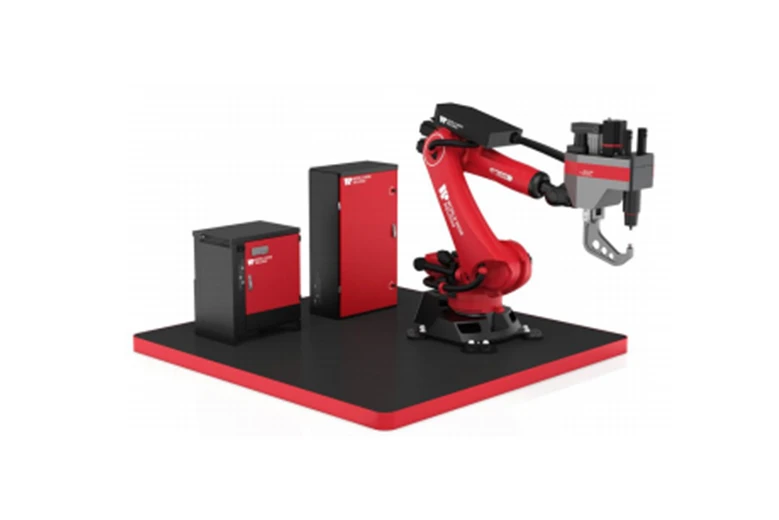
Ask a manufacturing engineer how they join two overlapping aluminum sheets, and the answer is usually one of two things: resistance spot welding (RSW) or self-piercing rivets (SPR). Both work. Both also carry costs that product designers have learned to live with — until a solid-state alternative called refill friction stir spot welding (RFSSW) matured into mass production.
Sep.29,2026
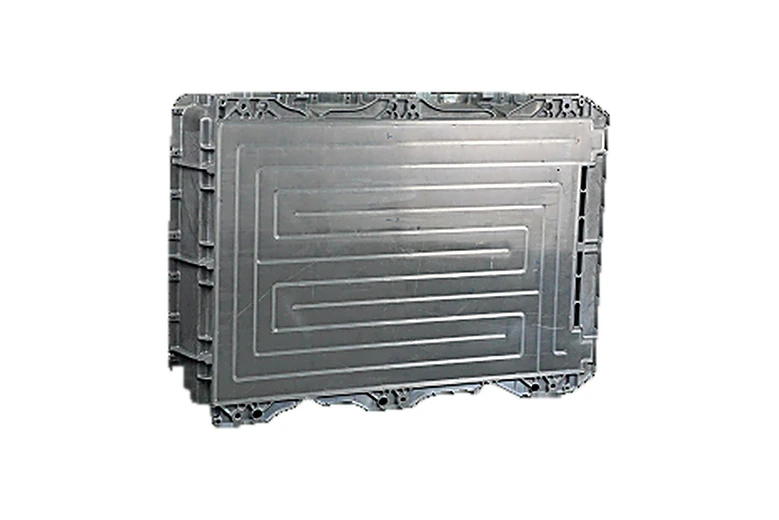
Case Study: Friction Stir Welding ADC12 Cast Aluminum to 6061 Extrusions in a Bus Battery Tray
Modern battery trays are a metallurgy puzzle wearing a structural role. The tray must be light, crash-stiff, leak-manageable, and cheap — so designers mix material forms: die-cast nodes and bosses for complex geometry, extruded profiles for rails and frame members, and rolled plate for covers. Each form is easy to make alone. Joining them is the problem, and a recent bus battery tray program shows how one manufacturer solved it.
Sep.29,2026
How to Specify and Accept Liquid Cold Plates: Burst, Pressure Drop, Leak and Thermal Tests Explained
Most cold plate quality disputes trace back to the same root cause: the buyer and supplier never agreed on what "good" means, in test terms. A liquid cold plate can pass a visual check and still fail in the field — clogged channels, creep leakage at a pulse-loaded seam, or a heat-absorbing surface that is out of flatness. Here is the test matrix that serious manufacturers and serious buyers use to align expectations, item by item.
Sep.29,2026
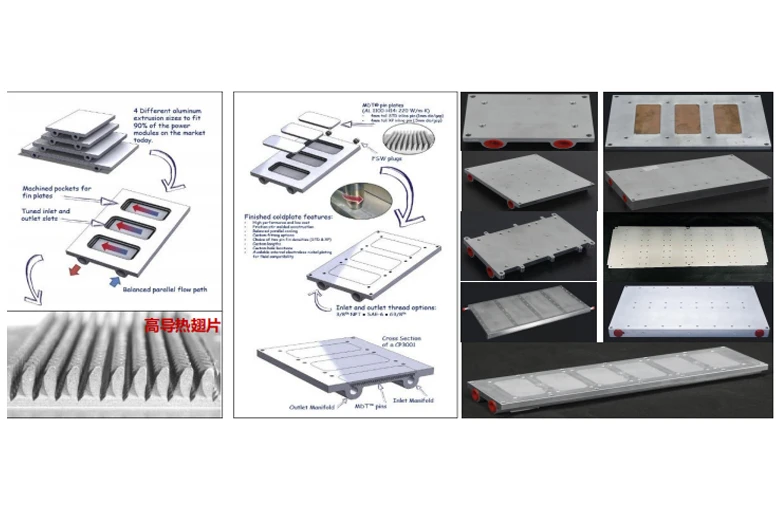
For most of computing history, "thermal management" meant fans. Air cooling defined the shape of servers, the layout of data centers, and the limits of every processor design. That era is ending. AI rack densities that once would have been measured in kilowatts are now quoted in multiples of 100 kW, and no quantity of fans can move that heat out of a rack economically. The industry's answer is direct-to-chip liquid cooling — and its rise is quietly rebuilding a supply chain around a component most data center buyers had never sourced before: the liquid cold plate.
Sep.29,2026
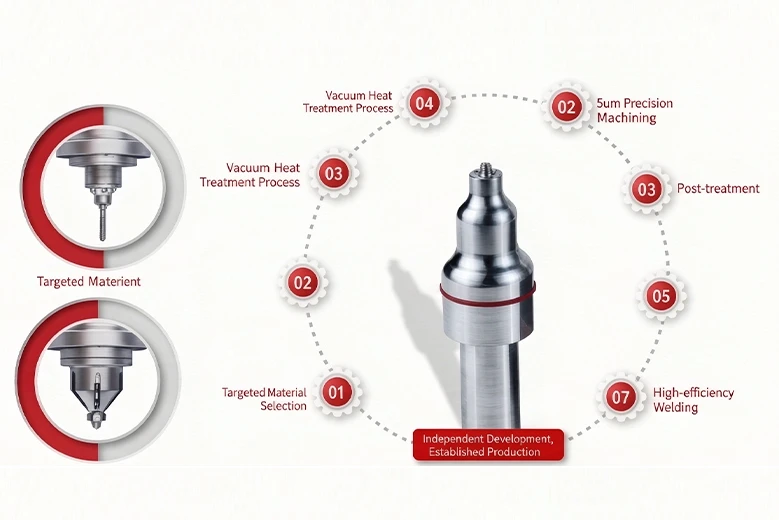
The Overlooked Heart of Friction Stir Welding: Inside a 1,000+ Tool Design Library
Friction stir welding has a paradox at its center. The physics — a rotating tool that plasticizes and forges metal without melting it — is elegant, widely published, and more than three decades old. The equipment is now sold by several vendors worldwide. Yet weld outcomes between two suppliers running identical machines on identical alloys can differ by a wide margin. The variable that explains most of the gap is the smallest, least glamorous part of the system: the stirring tool itself.
Sep.29,2026
"Need a Custom Cold Plate for Your Application?
Request a Free Thermal Design Review"
We provide high-strength, well-sealed core components for new energy vehicles that meet global automotive standards. Schedule a rapid technical consultation now.
Build a highly cohesive team of thermal management, special welding and precision manufacturing
QUICK LINK
QUICK LINK
LET’S CONNECT
LET’S CONNECT
+86 177 1265 6888 (WhatsApp)
+86 137 7167 8566 (WhatsApp)
Peter Fu peter@dyf-sz.cn
Eva Zhou deyanfumachinery@gmail.com
Building 3, No. 28 Xinchang Road, Suzhou Industrial Park, Suzhou City, Jiangsu Province